OVERVIEW
IPGL originated from research into the Alien Botany archive recovered from the doomed Novy Mir mission. Unlike other podcore records that end in tidy illumination, Alien Botany “lives in darkness,” withholding context and multiplying questions – which is precisely what compelled formal study.
IPGL was founded as a research-and-public-engagement facility to investigate image germination under controlled conditions, combining sensory environments, physiological and psychological monitoring, as well as participatory methods that treat the public as active co-investigators. This work continues, integrating study transmissions into a growing archive.
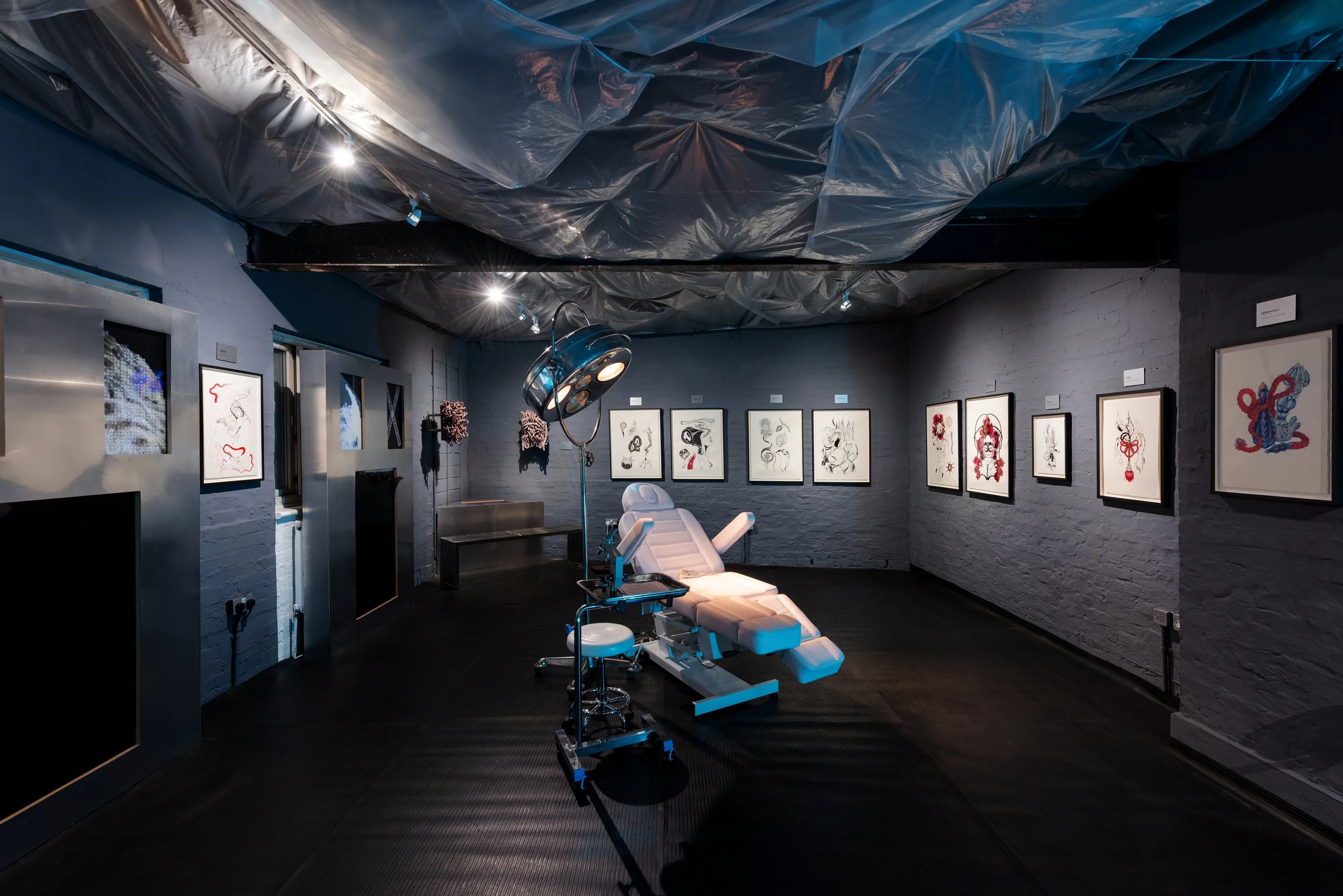
ORIGINS
ORIGINS
■ ORIGINS
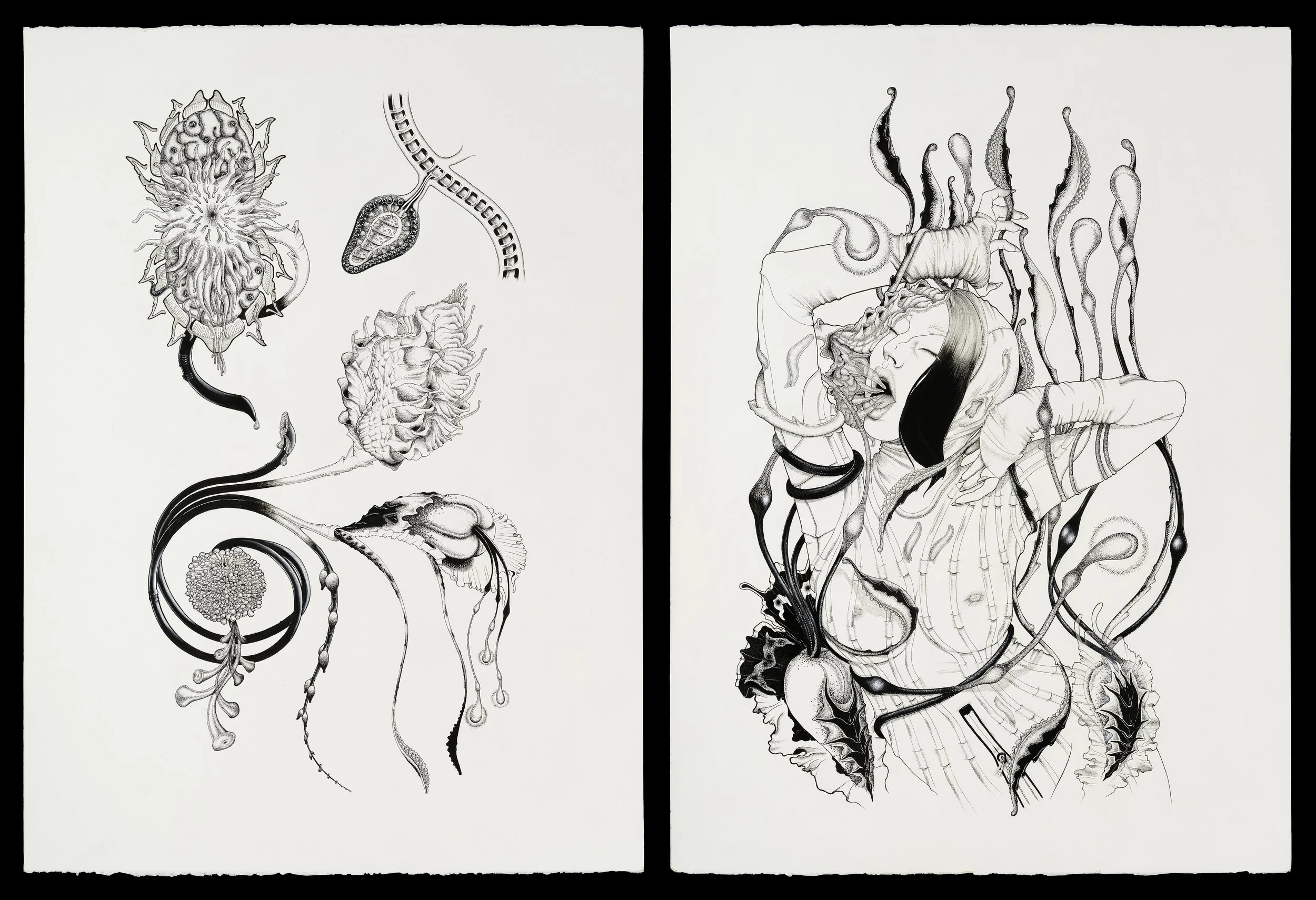
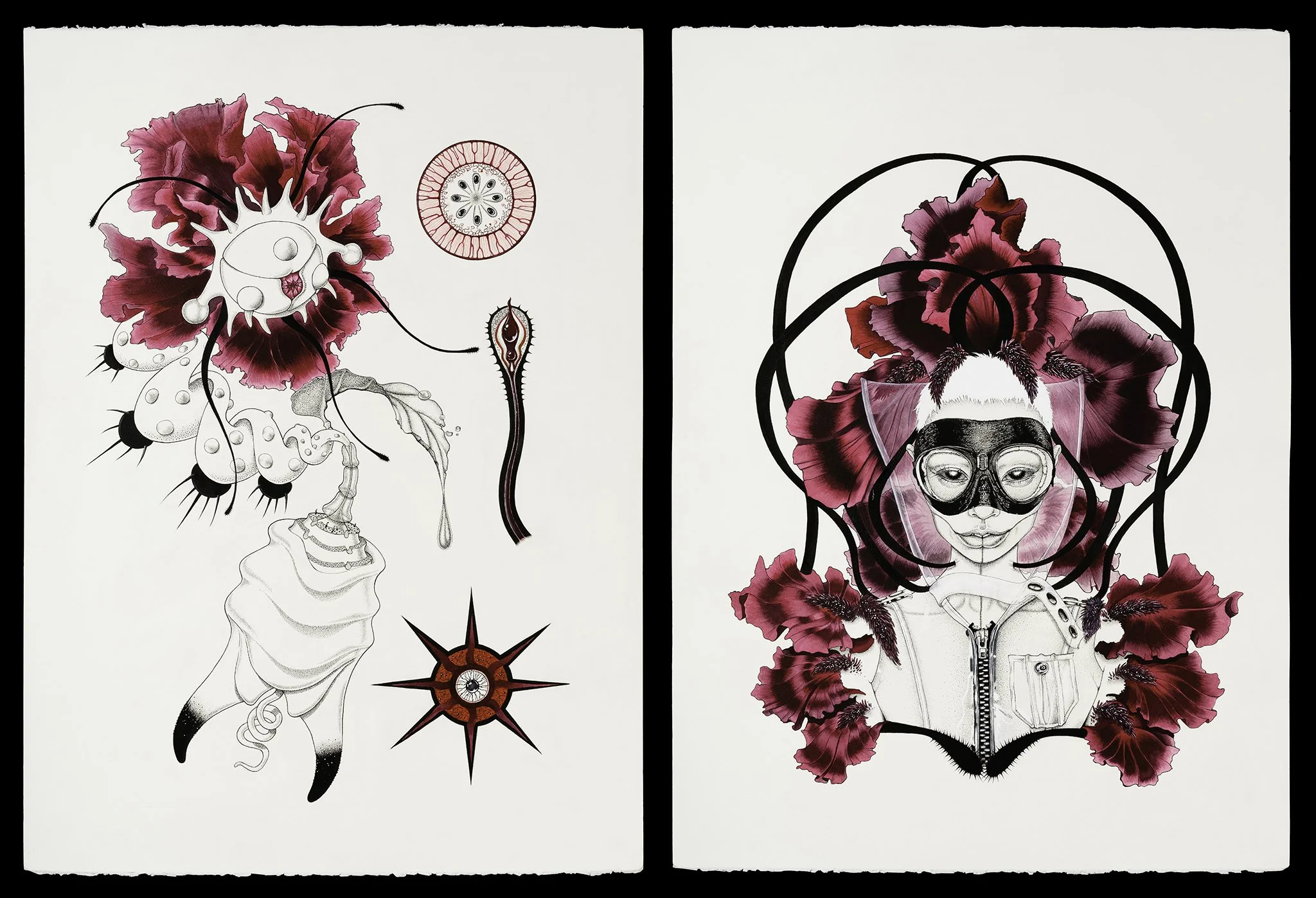
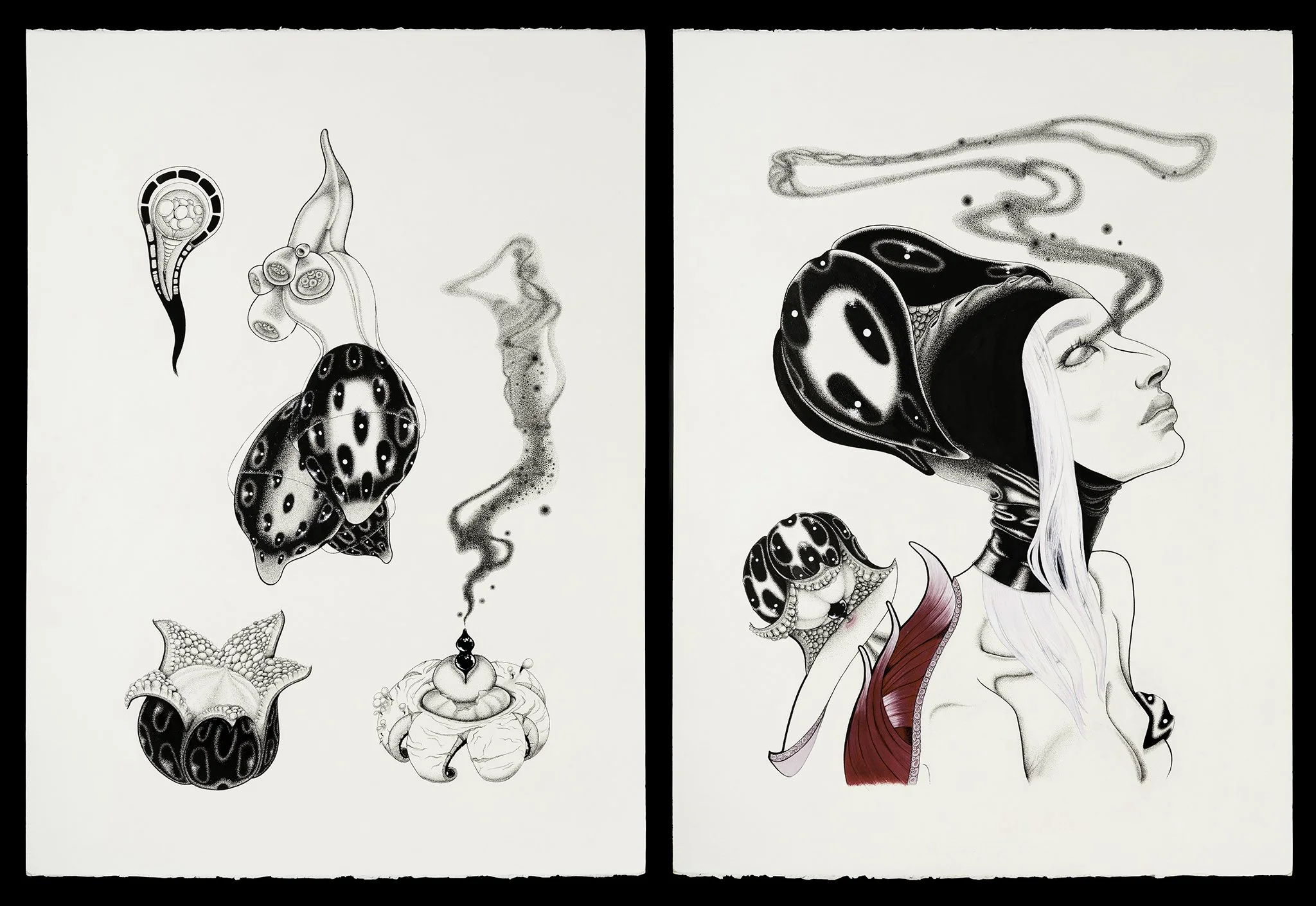
The Institute for Psychogametous Life emerged from the afterlife of the Novy Mir mission. Launched in 2152 under the Astro-Erotics Initiative, the Novy Mir was a semi-organic vessel built to harvest alien sensations in the Gamma Serpentis quadrant. It vanished soon after arrival. Seventeen years later, a small capsule was retrieved from the Arctic Ocean. Within it were a series of botanical renderings by the mission’s pilot, Zoetica Ebb. The drawings were composed in an unidentified psychoactive fluid that was later found to contain dormant parasitic colonies. Trace material now designated Sample Δ MC-7 had hitchhiked in the capsule and was present as residue within the archive itself. This material is now actively contained and monitored within Lab C at the Institute.
The recovered documents eventually became known as Alien Botany. When first reproduced on Earth, the images began to propagate and evolve. Viewers reported vivid after-images, involuntary motor responses, and an overwhelming urge to recreate the forms by hand. What had been assumed to be a field document revealed itself to be a living system transmitting through human cognition.
In the decades that followed, the archive’s influence spread through both public fascination and scientific alarm. Scholars named the phenomenon psychogametous reproduction, the symbolic germination of alien life through human hosts. To study this process, the Institute for Psychogametous Life was founded as a hybrid research and containment facility combining sensory experimentation, physiological monitoring, and participatory observation.
Today, the Institute houses the original Alien Botany archive within its Sensory Pollinarium, a controlled ecosystem designed to simulate the environmental and perceptual conditions of the alien biosphere described by Ebb. Within this living laboratory, the archive continues to interact with researchers and visitors alike, generating new symbolic transmissions and adaptive forms of consciousness.
Through the Sensory Pollinarium, the IPGL safeguards the Alien Botany materials while advancing its central mandate: to study, preserve, and engage with the emergence of psychogametous life on Earth.
■ FREQUENTLY ASKED QUESTIONS
-
We cannot confirm the existence of physical plants matching the drawings. No images or logs survived beyond Ebb’s renderings.
However, certain diagrams contain growth patterns consistent with non-terrestrial botany models, suggesting she observed environmental logic even if the organism was symbolic.
Some researchers believe the “plants” exist only as symbolic substrates and never possessed physical form. -
The capsule contained no propulsion capable of traversing eleven parsecs in under five years. The prevailing hypothesis is that it travelled in the wake of another vessel, likely the Зенит, shortly before that ship’s destruction.
However, modelling of the capsule’s trajectory suggests micro-adjustments inconsistent with passive drift or simple retrieval. The Institute does not propose agency, but acknowledges a pattern of course corrections that aligns with symbolic vectors found in the archive itself. Whether these vectors influenced the capsule, or reflect its movement, remains under investigation. -
Susceptibility does not correlate with artistic skill, psychological profile, sensory processing differences, or known neurological markers.
The most supported hypothesis is that the images exploit a cognitive blind spot shared across humanity but expressed differently in each person. This blind spot functions as a symbolic receptor whose activation cannot be predicted but can be triggered by specific motifs.
Subjects who never germinate still show subtle attentional shifts in Pollinarium conditions, suggesting a dormant capacity. -
It is presumed that Zoetica Ebb did not survive her ordeal on Chimera. The capsule’s launch pattern indicates a terminal event, and trace DNA within the sealant fluid is consistent with catastrophic injury. No further remains were recovered, and the circumstances of her final moments cannot be confirmed.
Because Ebb exhibited an unusually stable perceptual response to the organisms now classified as psychogametous lifeforms, the Institute conducted clonal reconstruction using genetic material preserved in the capsule.
The resulting subject, Ebb-2, functions as a calibrated perceptual baseline, allowing researchers to track symbolic fluctuations and refine observational protocols within the Sensory Pollinarium. Her assignment is ongoing. Through Ebb-2, the Institute continues the work initiated when Zoetica Ebb launched the archive toward Earth.
-
The crew was presumed dead until the recovery of the capsule. The drawings and field notes within the archive clearly depict the crew undergoing hybridisation with Chimera’s local flora and fauna. Ebb’s renderings show progressive anatomical fusion, loss of human form, and eventual incorporation into the planet’s living systems.
No physical remains have ever been recovered. The archive is the only record of their transformation, and it is from these clinical illustrations that our understanding of the crew’s fate originates.